
FAQ
Speakers
- Lia Braun
- Shannon Foster
- Twyla Gilroy
- Judi Heppner
- Simon Laplante
- Carie McIntosh
- Anita Posaluko
- Sherisse Picklyk-Dear
- Jocelyne LeBlanc Boulet
Q. Lia Braun

Lia Braun
204-772-9168
Email Lia
Winnipeg, Manitoba
Services, especially in the area of FASD. She has served as Provincial FASD Specialist
for Metis CFS Authority, Clinical Supervisor for Cross Lake FN STAR FASD Mentor
Program, Chair, MCAP Newsletter, and Coordinator, Norway House Fetal Alcohol
Mentoring Project, and was Special Services Consultant in Frontier School Division for
17 years. She has also been a resource teacher, classroom teacher, and teacher librarian.
*Complete resume available on request
Q. Shannon Foster

Shannon Foster
431-737-0145
Email Shannon
Interlake
degree and a Bachelor of Social Work degree at the University of Manitoba. She also earned
an Advanced Bachelor of Arts degree, with a specialization in Psychology. She has gained her
experience working with children, youth and families over the last 10 years recognizing their
strengths and empowering them to reach emotional, spiritual, and psychological well-being. She works with individuals and their families/support networks to discover their needs and build on their strengths. She believes that growth and healing is always possible and to always be curious and enjoy the gifts each individual and family has to give.
Shannon has experience in the field of neurodevelopmental disorders, generally Fetal Alcohol
Spectrum Disorder, childhood development and the impacts of mental health, trauma and other hidden forms of disability on the developing brain. She has worked in FASD prevention and intervention programs, the child welfare system and within private practice. Shannon is
considered one of the leading professionals in working directly with adolescents with FASD in
Manitoba and has worked in various prevention and intervention FASD programs, as well as
seeks to provide community based services and alternative therapeutic options for individuals
with disabilities. Shannon implements more strength-based and empowerment theories into
practical policy for community-based service programs and has enriched her experience with
first-hand knowledge of working with multi-agency involvement and the fields of healthcare,
FASD prevention and intervention, child neurodevelopment, Child and Family Services, suicide
assessment, crisis management and identifies as a Métis woman.
Q. Twyla Gilroy

Twyla Gilroy
204-622-6223
Email Twyla
Dauphin
Dauphin/Swan River region. She is passionate about raising awareness and providing education
to community and service providers about Fetal Alcohol Spectrum Disorder. She assists and
supports families as they navigate the process of an FASD assessment in partnership with the
Manitoba FASD Network. Additionally, Twyla has worked as a coordinator with the InSight mentoring program, which supports women using an evidenced-based FASD prevention model. She also brings with her a strong background in the field of addictions. Twyla is a Registered Social Worker.
Presentations can be tailored to the audience. They can include FASD 101, prevention, destigmatization, assessment and referral process, the areas of impairment (brain domains), strategies for home/school, and all ages including preschoolers, children, adolescents and adults.
Q. Judi Heppner
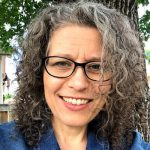
Judi Heppner
204-619-0923
Email Judi
Winnipeg, Manitoba
Judi has worked for 2 decades in social services and health, including with families in
which parents and/or children had FASD. She has delivered training about FASD to
social service organizations, school personnel, university and high school students and
foster parents.
Areas of specialty:
• Children with FASD
• Characteristics of FASD
• Strategies
• Prevention
Q. Simon Laplante
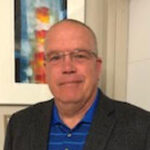
Simon Laplante
204-290-8120
Email Simon
years as an educator. Simon has been a teacher, vice-principal, principal,
assistant superintendent (Seine River School Division) and a professor at the
Université de St-Boniface. After retiring Simon was asked to implement an
alternative program for at risk high school students. Located at the St-Norbert
Art Centre, the program has proven to be very effective. For the last three year
Simon has been mentoring young vice-principals for the Seine River School
Division. Simon is the adoptive father of a child with FASD since her birth in
1989. In July 2013, Simon successfully defended his Master thesis on the
impact the children with FASD have on their parents’ relationships in the context
of the couple, with the school and the community. Simon is a member of the
Family Advisory Committee for the Canada FASD Research Network. Simon has
been very active in the last 15 years in speaking at provincial and national
conferences, to schools and divisional staff about FASD and the need to
differentiate our programs and expectations.
Originaire du Québec, Simon est un éducateur au Manitoba depuis 35 ans.
Simon a occupé plusieurs rôles (enseignant, directeur adjoint, directeur, directeur
général adjoint (Seine River School Division) et professeur-associé à l’Université
de St-Boniface. À la retraite depuis 6 ans, Simon a trouvé le temps d’implanter
un programme alternatif pour des étudiants du secondaire a risque d’abandonner
leurs études. Localisé au Centre des Arts de St-Norbert le programme continue
a aider de nombreux jeunes. Simon est aussi un mentor pour de futurs
directions au sein de la division Seine River. Simon est le père adoptif d’un
enfant (adulte aujourd’hui) qui a le SAF. En juillet 2013 Simon a défendu sa
thèse de maîtrise qui porte sur l’impact des enfants avec le SAF sur les relations
de leurs parents entre le couple, l’école et la communauté. Simon est aussi
membre du Family Advisory Committee du Canada FASD Research Network.
Simon présente publiquement depuis 15 ans au niveau national, provincial et au
niveau des instances scolaires. Le message est toujours centré sur la necessité
de différencier nos approches et nos attentes.
Q. Carie McIntosh
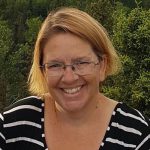
Carie McIntosh
204-627-7458
Email Carie
Opaskwayak Cree Nation, The Pas, Manitoba
assisting families with children with disabilities access resources, support, equipment
and respite. Currently, Carie is the Disability Research Advocate for the Ospaswayak
Health Authority, a position which involves investigating support models for people with
disabilities on reserve.
Q. Anita Posaluko
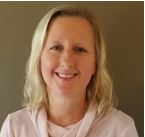
Anita Posaluko
204-582-8658, ext. 1
Email Anita
Winnipeg, Manitoba
The FASD Family Support program works with families and the community to support
children and youth with Fetal Alcohol Spectrum Disorder. The team consists of
individuals from various professional and educational backgrounds, such as
Occupational Therapy, Social Work, Sociology, Counselling and Therapy. Combined
experience includes direct work with families, involvement with the educational and
childcare system, mental health, addictions, trauma and attachment. The team’s
experience ranges from 5-20 plus years in the field of FASD. Areas of workshop topics
include: FASD Basics, Strategies (for home, school or daycare), Sensory Integration
and self regulation for children and youth with FASD. Please note: Ability to meet
requests is based on the availability of program staff.
Q. Sherisse Picklyk-Dear

Sherisse Picklyk Dear
204.492.0677
Email Sherisse
Sherisse has over 28 years of experience supporting people across the life span in rural, urban
and Indigenous communities. Working from a strengths and trauma informed lens, Sherisse
has extensive experience in the CFS system, medical field and in mental health. She possesses a BSW, a BA in psychology and is a registered Social Worker. She holds the chair position for the Interlake FASD committee and is a member of the Manitoba FASD Coalition. Sherisse was the IERHA’s FASD Diagnostic Coordinator for ten years and has been mentored by some of the most respected experts in Manitoba. In this role she has provided comprehensive coaching, support, planning and education to schools, families and agencies. Sherisse was involved in the construction of the Interlake’s Manitoba Key Worker program including training & community engagement. She assisted in securing and maintaining the S.O.S. FASD respite program in Selkirk. Sherisse created and facilitated the first FASD education session for the IERHA. She has provided promotion and facilitation of the Building Circles of Support informational series for nine years has been the long time rural rep for the Manitoba FASD Coalition’s info series. She was instrumental in creating the first FASD conference in Selkirk and has brought many guest speakers to the Interlake. Sherisse has provided training and education to school staff, daycares, foster parents, CFS workers, government and community programs. Sherisse is considered to be one of the pioneer providers of FASD awareness & education in the Interlake.
In keeping with the Canadian standards, presentations can incorporate a variety of sub topics
such as FASD 101, referral & assessment process, stigma, strategies, life transitions and other
challenges that intersect with supporting folks with FASD.
Q. Jocelyne LeBlanc Boulet
Jocelyne LeBlanc Boulet
Email Jocelyne
A career in the education field for over 35 years with schools in Manitoba: Winnipeg, Portage la Prairie, Notre Dame de Lourdes as well as Iqaluit and Yellowknife, Jocelyne has a varied
approach to teaching and learning. From classroom teacher to school counsellor and principal,
Jocelyne has a deep understanding of the education system. Nonetheless, when raising
awareness for support services required by her son with FASD, she quickly realized how complex these negotiations really are.
Raising a child with FASD can be complex enough, add severe dyslexia and anxiety and one
develops an intimate relationship with the student support services team of the child’s school.
Although a working member of this system, Jocelyne discovered how intimidating and confusing the various meetings, plans and implementation of such plans could be. While working towards a more equal partnership in the interventions required for her son, she began to slowly understand why so many families are reluctant to attend, much less participate or understand, the approaches proposed by schools. In her work as administrator and school counsellor, she adapted her discussions, meeting times or locations and discussions with families and students needing support to succeed in class. Guided by her own experiences and those of her son, who is graduating from U of M with a Bachelor degree in Social Work, Jocelyn has developed an understanding of how to make the system work to benefit the child. Based on legal documentation and MB education law, she wants to share her strategies and coach families as they advocate for their child with FASD.
In her retirement, Jocelyne has created CONNECTING LINKS, a consultation service which will attempt to provide guidance and clarity for those important school discussions.
Originaire du Nouveau Brunswick et diplômée de l’université de St. Boniface, Jocelyne offre ses services en français si le besoin en est.


